Size a Niche Without Expensive Tools
You can estimate a niche's size for free using search interest, seller counts, communities and reviews. Here is a simple afternoon method.
Mohamad Mouaz
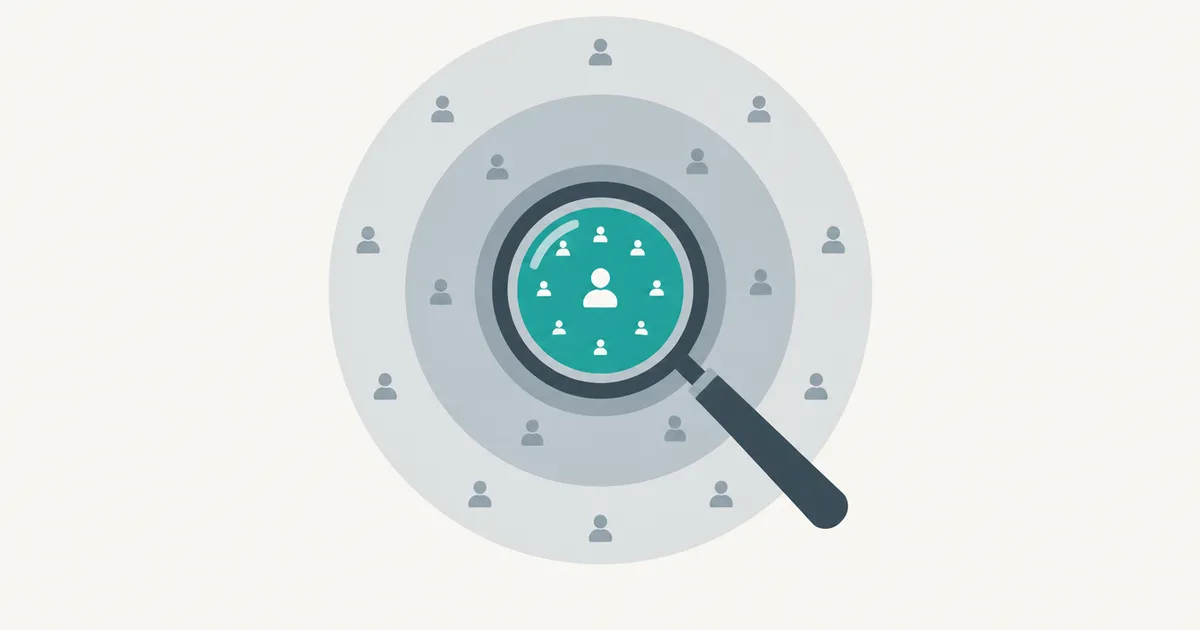
Before you build a store around a niche, you should know roughly how big it is. Is it a market of thousands, or millions? Are there enough buyers to make a living, or only enough for a hobby?
You do not need an expensive research subscription to find out. With free sources and a little common sense, you can get a decent estimate in an afternoon. It will not be exact, but it does not have to be. It only has to be good enough to say "worth pursuing" or "not worth it."
Decide what "size" means for you
First, be clear about what you are measuring. There are three useful numbers. The number of people who might buy. The amount they might spend. And the share you could realistically win.
Most beginners only think about the first number and imagine the whole population as customers. Real size is smaller: people who have the problem, know about solutions, can afford yours and are reachable by you. Each of these filters shrinks the number, and that is normal.
Start from search interest
Search behavior is the easiest window into demand. Look up the main terms people use for your niche and see how much interest they show. Free tools give you relative scales, and a few give rough volume estimates.
Compare your niche term against a large, well-known term in the same area to get a sense of scale. If your term is a tiny fraction of the broad one, the market is small. I describe how to avoid common misreadings in reading trend data without fooling yourself.
Count the sellers
Another view comes from the supply side. How many shops are selling in this niche? How many listings appear for the main terms? Are there specialist sellers or only general ones?
A handful of established sellers suggests a market that works. Hundreds of near-identical listings suggests strong competition. Very few sellers could mean a hidden opportunity, or a market that does not exist. You need other evidence to tell which.
Read where the buyers gather
Communities reveal a lot. Forums, social groups and comment sections show how many people care about the topic, how active they are and what they ask for. Check how often new posts appear and how engaged members are.
Pay attention to the questions. Frequent requests for recommendations, repeated complaints about current products and detailed discussions all suggest an active market. Silence suggests the opposite.
Use reviews as a proxy for sales
Reviews are a rough record of past purchases. A product with thousands of reviews has sold many units, though only a fraction of buyers leave one. Compare the review counts across the top products in your niche to estimate the volume.
You can also look at how recent the reviews are. A steady stream of new ones means current demand. A pile of old reviews with nothing recent means the market may have cooled. The wider approach to this is in what competitor reviews really tell you.
Do a back-of-the-envelope calculation
Now turn the clues into a rough number. Estimate how many people search for the niche each month. Guess what share would buy, a small percentage for most products. Multiply by the average price. Then consider what part of that you could reasonably reach.
The result is not a forecast. It is a sanity check. If the best case produces a tiny revenue number, the niche is too small. If a modest slice of it would give you a good income, the idea deserves a deeper look.
Check the shape of the niche, not just the size
A smaller niche is not always a worse one. A tight group of passionate buyers can be more profitable than a huge, price-driven market. They tend to care about quality, accept higher prices and be easier to reach.
Look for signs of passion and specificity. If buyers have special needs that general products ignore, a focused seller can win. This is the logic behind uncovering untapped niches first.
Know the limits of your estimate
Free methods have gaps. Search tools miss buyers who never search that way. Reviews undercount sales. Communities may be loud but small. Treat all of these as clues, and look for places where several clues agree.
If three or four independent signals point the same way, you can have reasonable confidence. If they conflict, dig deeper before you spend anything.
Speed up the first pass
When you are screening many niches, a fast first read helps. TrendHunterNeo uses live trend data and competitor storefronts to give a profitability verdict in under a minute, so you can discard weak niches quickly and save your manual research for the strong ones.
The takeaway
You can size a niche for free. Look at search interest, count sellers, read the communities, use reviews as a proxy and run a rough calculation. The aim is not precision, it is a decision: pursue it, or move on to the next one.
Find your next winning product with
TrendHunterNeo
AI-powered research that scans live trend data and competitor storefronts, then returns a profitability verdict in under a minute. Validate a product idea before you spend on inventory or ads.