Know Customer Lifetime Value Before You Spend on Ads
Judging ads by one sale misses repeat buyers. Estimate customer lifetime value from profit, compare it to acquisition cost and protect cash flow.
Mohamad Mouaz
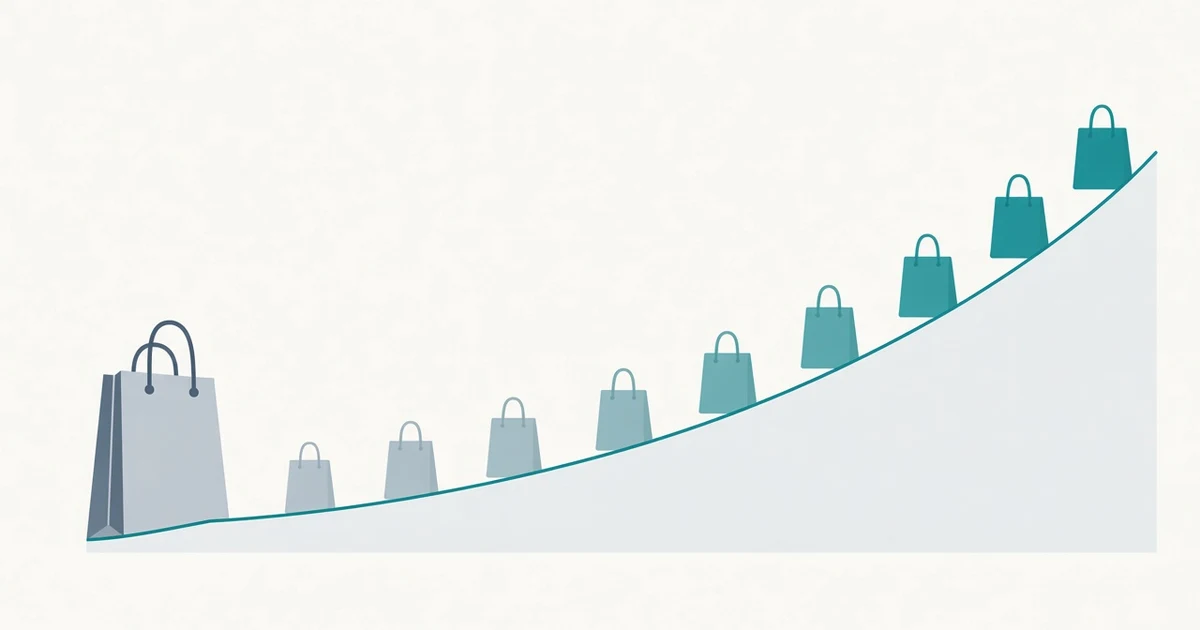
Most small stores judge their ads by a single sale. Spend ten dollars, get a twenty-dollar order, call it a win or a loss based on that one transaction.
That view misses something big. Many customers do not buy just once. They come back. If you know how much a customer is worth over time, you can make much smarter decisions about what to spend to win them in the first place. That number is called customer lifetime value.
What lifetime value means
Customer lifetime value is the total profit you expect to make from a customer over the whole time they buy from you. Not just their first order, but every order after it.
For some stores, it is barely more than the first sale. Customers buy once and never return. For others, especially stores selling consumables or products people collect, a single customer can be worth many times their first order.
Knowing which kind of store you run changes everything about how you spend on marketing.
A simple way to estimate it
You do not need complex models. A rough estimate is far better than none.
Start with three numbers. Your average order value. How many times the average customer buys in a year. How many years a typical customer keeps buying.
Multiply them together to get the total revenue per customer. Then multiply by your profit margin to get the total profit.
Say your average order is 40 dollars, customers buy 3 times a year, and they keep buying for 2 years. That is 240 dollars of revenue. At a 30 percent margin, the lifetime value is 72 dollars of profit.
If you are new and do not have much data, use conservative guesses and update them as you learn.
Use profit, not revenue
This is where many sellers go wrong. They calculate lifetime value using revenue, then use that number to justify ad spend. But revenue is not money in your pocket.
Always use profit after product costs, fees, shipping and returns. I explained how to find your real margin in do the margin math before you love a product. Your lifetime value should be built on that number.
Compare it to what you spend to win a customer
The other half of the picture is customer acquisition cost: how much you spend on ads and marketing to win one new customer.
If your lifetime value is 72 dollars and it costs you 30 dollars to win a customer, you are in a healthy position. You make money over time, even if the first order alone does not cover the ad cost.
If it costs you 90 dollars to win a customer worth 72, you are losing money on every new customer, however good the first sale looks.
Why this changes your ad decisions
Breakeven ROAS tells you whether a single order covers its ad cost. I explained it in breakeven ROAS explained in plain English. That is a useful starting point, especially for stores with few repeat buyers.
But if your customers come back often, you can afford to spend more on the first order than it earns, because you will make the money back on future orders. Lifetime value tells you how much more.
Be careful, though. Only rely on future orders if you have real evidence that customers come back. Hopeful assumptions here can drain your cash quickly.
Cash flow still matters
Even with a great lifetime value, you need cash to survive the gap between spending on ads and earning back from repeat orders. A customer worth 72 dollars over two years does not help pay this month's bills.
Small stores especially should be careful not to spend too far ahead of their cash. A good rule is to aim to recover your acquisition cost within the first few months, not the full lifetime.
Raise lifetime value on purpose
Once you understand lifetime value, you can work to raise it. Encourage repeat purchases with a follow-up email when a product is likely to run out. Offer complementary products. Build bundles that customers return for. Look after customer service, because happy customers come back.
Each of these makes every customer more valuable, which in turn lets you spend more to win new ones. If you want ideas for higher-value offers, see how to research irresistible offers.
Check it by product type
Lifetime value can vary a lot by product. Customers who first buy a consumable product might come back often. Customers who buy a one-off item might never return.
Look at your data by first product purchased. You might find that some products bring in your best long-term customers. Those products deserve more of your ad budget, even if their first-order profit looks similar to others.
Make better long-term decisions
Lifetime value turns marketing from a series of single bets into a long-term plan. Estimate it honestly, base it on profit, compare it to your acquisition cost and protect your cash flow along the way.
If you are deciding which products to build your store around, TrendHunterNeo can help you check demand. Products people need again and again often make the strongest foundation, because every customer they bring in keeps paying back.
Frequently asked questions
- What is customer lifetime value?
- The total profit you expect from a customer across every order they place with you, not just the first one.
- How do I estimate lifetime value simply?
- Multiply average order value by how many times a customer buys and by your margin, using a realistic time period.
- Why use profit instead of revenue?
- Revenue is not money you keep. Using revenue overstates lifetime value and justifies ad spend you cannot afford.
- Does a high lifetime value mean I can spend freely on ads?
- Not quite. You still need cash to cover the gap between paying for ads and earning back from repeat orders.
Find your next winning product with
TrendHunterNeo
AI-powered research that scans live trend data and competitor storefronts, then returns a profitability verdict in under a minute. Validate a product idea before you spend on inventory or ads.