A Saturated Market Is Not a Dead Market
A crowded market usually means proven demand. Learn how to stand apart, go narrow, check the economics and spot a market that is truly finished.
Mohamad Mouaz
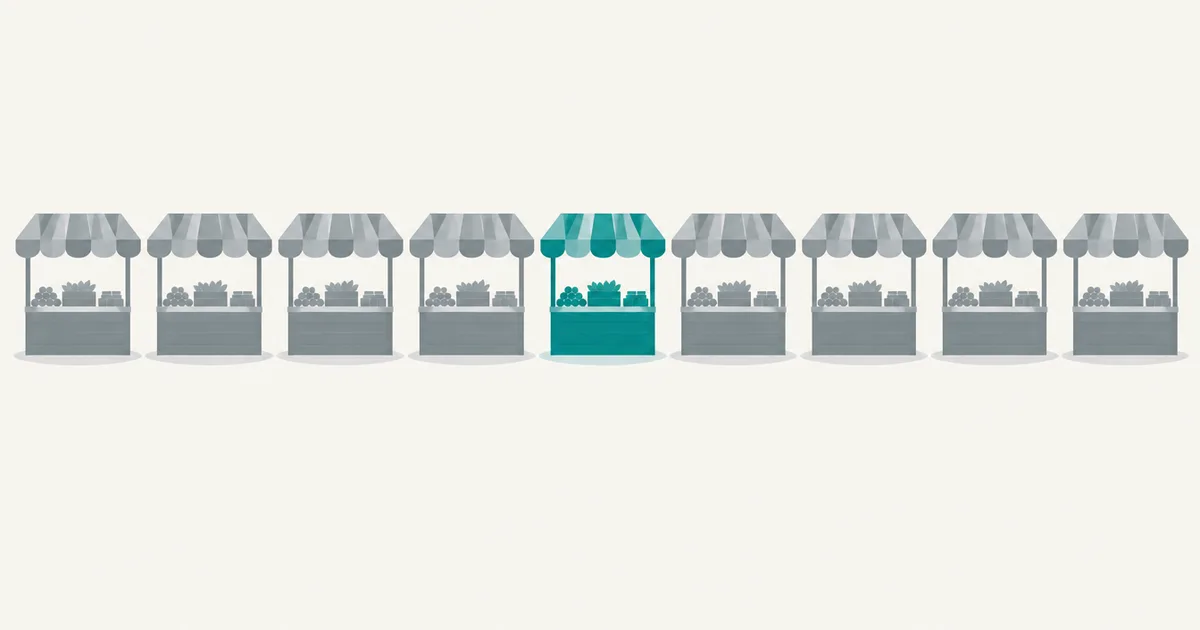
You find a promising product, search for it and discover that dozens of sellers are already there. Your first instinct is to walk away. Too crowded, too late, no room for you.
That instinct is understandable, and sometimes correct. But "saturated" and "dead" are very different things. A crowded market usually means that demand is real, which is exactly what you want to know. The question is whether you can compete in a way that matters.
Competition is evidence
Think about what a busy market tells you. Many sellers are there because customers are buying. Nobody sets up shop in a place where nothing sells. Of all the risks in a new product, proven demand is one of the biggest, and a crowded market has already reduced it.
An empty market, by contrast, might be a hidden gem or a graveyard. You cannot easily tell which. Crowded markets give you data on prices, buyer language and what works, and you can use it. This is the logic behind outmaneuvering competitors.
Saturation is about sameness
When people say a market is saturated, what they usually mean is that the offers look identical. Same product, same photos, same description and a race to the lowest price. That is the dangerous kind of saturation.
If everyone competes on the same terms, price becomes the only difference, and margins collapse. But if you can differentiate in a way that customers value, you step out of that race. Differentiation is the real question, not the number of sellers.
Ways to stand apart
There are many ways to be different without inventing a new product. You can serve a narrower audience with specific needs. You can fix the most common complaint in the category. You can bundle items into a more useful set. You can offer clearer instructions, better packaging or faster delivery.
The best ideas come from listening to customers. Read their reviews and complaints and look for what the top sellers get wrong, using the methods in mining one star reviews for product ideas.
Go narrow
A broad category is crowded, but a narrow slice often is not. "Water bottles" is saturated. "Water bottles for climbers who carry them clipped to a harness" might not be.
Narrowing your target lets you speak directly to a specific person, which makes your marketing more effective and your product more relevant. It also reduces the number of direct rivals. The thinking behind this is in uncovering untapped niches.
Compete on trust and experience
Products are only part of what people buy. They also buy confidence. A clear brand, honest descriptions, quick replies, easy returns and good packaging all matter.
In a market full of similar items, the seller who feels reliable has an edge. Many small improvements in the experience add up to a real reason to choose you. These are things a larger or lazier competitor often neglects.
Check whether the economics work
Before you commit, make sure the numbers still make sense in a crowded space. Competition can drive up advertising costs and push prices down. If the margin disappears, being different will not save you.
Run through your costs honestly, as described in doing the margin math, and test with a small experiment before buying much stock. A narrow position with a healthy margin beats a broad one that barely breaks even.
Know when a market really is dead
Some markets are genuinely finished. Look for signs: falling search interest across several years, few new reviews on the leading products, sellers leaving and prices at the floor with no way to improve.
If demand is shrinking, even a clever angle will struggle. Check the long-term trend before assuming you can fix it with positioning. The warning signs of fading demand are similar to those in why most trending products are already too late.
Be realistic about your edge
Ask yourself honestly what you bring that others do not. A better design? A deeper understanding of a specific audience? Access to a better supplier? A stronger story? If the answer is "nothing, really," then the crowded market is a poor choice for now.
It is fine to conclude that and move on. But if you can name a credible edge, a crowded market may be the safest place to start.
Get a fast read
To tell the difference between a healthy crowd and a dying one, you need both demand data and a view of the competition. TrendHunterNeo looks at live trend data and competitor storefronts together and returns a verdict in under a minute, which is a quick way to check before you invest more time.
The takeaway
Crowded does not mean dead. It often means proven. Look for sameness you can break, narrow your focus, compete on trust, check the economics and know the real signs of decline. A saturated market with a clear edge can be a better bet than an empty one with no evidence at all.
Frequently asked questions
- Is a crowded market a reason to walk away?
- Not by itself. Many sellers usually means customers are buying, which removes one of the biggest risks in a new product.
- What does saturated really mean?
- Usually that every offer looks the same, with the same photos, descriptions and race to the lowest price.
- How can I stand out without inventing a new product?
- Serve a narrower audience, fix the most common complaint, or compete on trust with honest descriptions, fast replies and easy returns.
- What are signs a market really is dead?
- Falling interest over several years, few new reviews on leading products, sellers leaving and prices collapsing.
Find your next winning product with
TrendHunterNeo
AI-powered research that scans live trend data and competitor storefronts, then returns a profitability verdict in under a minute. Validate a product idea before you spend on inventory or ads.