Breakeven ROAS Explained in Plain English
Revenue is not profit. Learn what breakeven ROAS is, how to calculate it from your margin and how to judge every ad against that line.
Mohamad Mouaz
If you have ever looked at an advertising dashboard and felt a quiet sense of confusion, you are in good company. Click costs, conversion rates, return on ad spend. The terms pile up fast, and the numbers seem to mean different things on different days.
There is one number that cuts through most of the noise: your breakeven return on ad spend. If you understand it, you can tell at a glance whether an ad is making money or quietly losing it. Here it is in plain English.
What ROAS actually means
Return on ad spend, or ROAS, is the revenue you earn for each unit of currency you spend on ads. If you spend 100 and your ads bring in 300 in sales, your ROAS is 3. Simple.
The catch is that revenue is not profit. A ROAS of 3 sounds good, but whether it is good depends entirely on your costs. Selling something with a thin margin at a ROAS of 3 can still lose you money. That is why breakeven matters.
What breakeven means
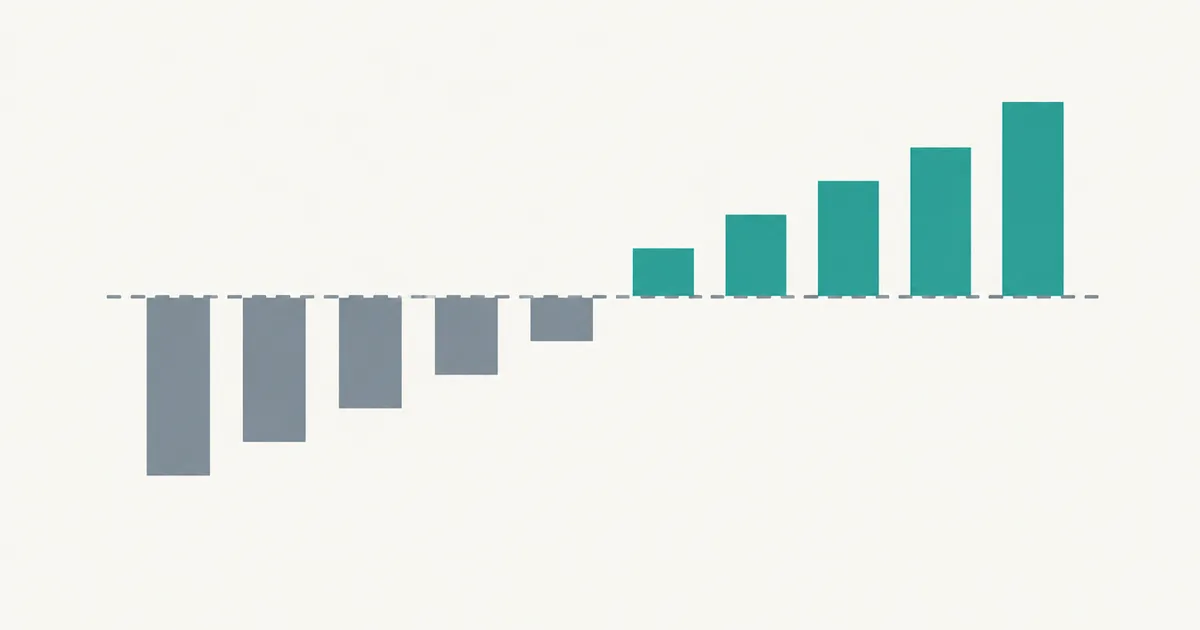
Your breakeven ROAS is the point at which your ads exactly pay for themselves, once you account for the cost of your product and other expenses. Below it, every sale loses money. Above it, you start to make a profit.
It is the line between "this ad works" and "this ad is a donation." Without knowing it, you are guessing every time you look at a dashboard.
The formula
You need one number first: your gross margin, which is the share of the selling price left after the direct costs of the product, shipping, fees and returns. If an item sells for 100 and costs you 60 to deliver, your margin is 40 percent, or 0.4.
Breakeven ROAS equals 1 divided by your margin. With a margin of 0.4, the breakeven is 1 divided by 0.4, which is 2.5. That means you must earn at least 2.5 in sales for each 1 you spend on ads just to break even.
A worked example
Say you sell a product for 50. After the product cost, shipping, payment fees and an allowance for returns, you keep 20. That is a margin of 40 percent, so the breakeven ROAS is 2.5.
Now suppose your ad reports a ROAS of 2. You are spending 1 to get 2 in sales, and that sale leaves you with only 40 percent of it, or 0.8. You lose 0.2 on every unit of currency spent. Even though the ad is bringing in sales, it is costing you money. With a ROAS of 4, you keep 1.6 for each 1 spent, a profit of 0.6.
Why a thin margin hurts so much
Notice how sensitive the formula is. A margin of 20 percent gives a breakeven of 5. A margin of 50 percent gives 2. The thinner your margin, the harder your ads must work.
This is why the full cost picture matters before you ever run an ad. If you have not worked out your margin, start with doing the margin math. A product that looks cheap to source can turn out to be impossible to advertise profitably.
Don't forget the other costs
The simple formula covers the direct costs. But your business also has other expenses: software, tools, your own time and any fixed costs. Breaking even on ads does not mean the business is profitable overall.
A sensible approach is to set a target ROAS above breakeven, to leave room for these costs and some profit. How far above depends on your circumstances. The pricing side of this is covered in data-driven pricing, which is worth a look if your margin is tight.
Lifetime value changes the picture
Some customers buy more than once. If so, you might accept a lower ROAS on the first purchase because you expect profit from later ones. This can be smart, but only if you have real evidence of repeat purchases.
Be conservative. Many beginners count on repeat business that never arrives. Until you have data, plan around the first order, and treat repeat sales as a bonus.
What to do with the number
Once you know your breakeven, use it as a filter. Check your campaigns regularly. Pause or fix the ones below the line. Give a bit more room to the ones comfortably above it.
Also use it before you start. If the breakeven ROAS is higher than what ads in your category typically deliver, the product may not suit paid advertising. You might look for a higher-margin version, a bundle or a different channel. The selling channels discussion can help you explore alternatives.
Get a quick sanity check
When you are choosing between many ideas, running the numbers for each takes time. TrendHunterNeo combines live trend data and competitor storefronts to deliver a profitability verdict in under a minute, which helps you drop weak ideas before you do the detailed math.
The takeaway
ROAS tells you revenue per unit of ad spend. Breakeven ROAS, which is 1 divided by your margin, tells you where that revenue stops losing money. Know your margin, know your breakeven and judge every ad against it. It is one small calculation that can save you a lot of money.
Frequently asked questions
- What is ROAS?
- Return on ad spend: the revenue you earn for each unit of currency spent on ads. Spend 100 and earn 300, and your ROAS is 3.
- How do I calculate breakeven ROAS?
- Divide 1 by your gross margin. With a 40 percent margin, breakeven ROAS is 2.5.
- Why does a thin margin make ads so hard?
- The formula is sensitive. A 20 percent margin needs a ROAS of 5 to break even, while a 50 percent margin needs only 2.
- Does breaking even on ads mean I am profitable?
- Not quite. The formula covers direct costs only, so software, tools and your own time still need to be paid for.
Find your next winning product with
TrendHunterNeo
AI-powered research that scans live trend data and competitor storefronts, then returns a profitability verdict in under a minute. Validate a product idea before you spend on inventory or ads.