Restock or Retire? How to Decide on Slow Sellers
Slow sellers quietly drain cash. Measure weeks of stock, check demand and real margin, then choose to restock, shrink, relaunch or retire.
Mohamad Mouaz
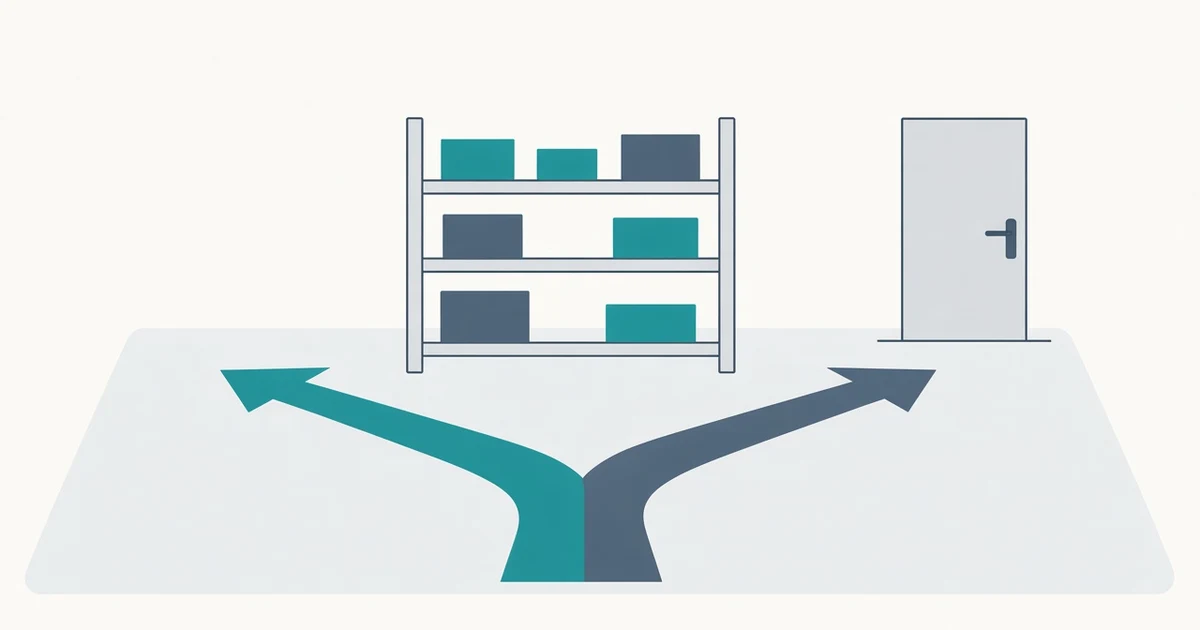
Every store has them. Products that sold well once, then slowed down. They sit on shelves, take up cash and quietly cost you money every month.
The hard question is what to do with them. Restock and hope they recover? Or retire them and move on? Most sellers avoid the decision, which is the worst choice of all. Here is a simple way to decide.
Why slow sellers are expensive
A slow seller is not just a product that is not making much money. It is actively costing you. Storage fees, the cash tied up in stock, the space it takes from better products and the attention it takes from you all add up.
The longer a product sits, the more it costs, and the more likely it becomes dead stock that you eventually sell at a loss or throw away. I covered that end of the story in how to kill dead stock with market research. The goal here is to make the call earlier, before it gets that far.
First, define slow
You cannot make a good decision without a clear definition. For most small stores, a useful measure is weeks of stock: how many weeks your current stock would last at your recent sales rate.
If you have 200 units and sell 10 a week, you have 20 weeks of stock. Set a rule that fits your business. For many stores, anything over 16 to 20 weeks of stock deserves a review.
Check whether demand fell or something broke
A product can slow down for two very different reasons. Either people want it less, or something in your store changed.
Look for the second kind first, because it is easier to fix. Did your price change? Did a key photo get removed? Did your listing drop in search because of a change? Did a new competitor appear with a better offer? Did reviews take a turn?
If something broke, fix it before you decide anything else. Give it a few weeks and see if sales return.
Check whether demand is still there
If nothing obvious broke, look at the market. Is interest in this kind of product falling everywhere, or just for you?
Look at search trends over the past year or two. Compare with the same period in previous years. A drop might be seasonal and normal, which I explained in seasonal vs evergreen products. Or it might be a steady decline that will not recover. Be careful not to misread the chart, a mistake I covered in how to read trend data without fooling yourself.
Look at the real margin
Before deciding to restock, check what the product actually earns you. Include landed cost, fees, shipping, returns and advertising.
Some products seem fine until you look closely. They sell steadily but need heavy ad spend or have high return rates, so the profit is tiny. Those are often the best candidates to retire, even if they still sell.
The four choices
Once you have the facts, there are four sensible paths.
Restock as normal. Demand is healthy, the margin is good and the slowdown was temporary or fixed. Order again, perhaps in a smaller quantity at first.
Restock smaller. Demand is real but lower than before. Keep the product, but order less so you are not stuck with too much stock again.
Improve and relaunch. The product has potential, but the listing, photos or offer need work. Fix those and give it a fair test before deciding.
Retire it. Demand is falling, the margin is thin or both. Sell the remaining stock, stop reordering and free up the cash and attention for something better.
Retire gracefully
Retiring a product does not have to mean a fire sale. You can bundle the remaining stock with a popular item, offer it to past buyers first or run a modest clearance price that still covers your costs.
What matters is that you stop reordering. The biggest losses come from restocking out of habit, not from the last units you sell at a discount.
Make it a regular habit
Do this review once a month or once a quarter, not only when a product is clearly in trouble. Sort your products by weeks of stock and look at the slowest few. Decide on each one, write the decision down and move on.
Over time, your range gets healthier. Cash goes into products that earn it back. Your store becomes easier to manage.
Use the freed-up cash well
Retiring a product is only half the win. The other half is what you do with the money and attention it frees up. Put it toward products with proven demand, or test new ideas carefully with cheap demand tests before you commit.
Tools like TrendHunterNeo can help you check whether interest in a category is rising or falling, which is useful at both ends of this decision. But the call itself is yours. Make it on purpose, make it often, and your shelves will hold more of what sells.
Frequently asked questions
- Why are slow sellers expensive?
- They tie up cash, take storage space and fees, and take attention away from better products.
- How do I define a slow seller?
- Use weeks of stock: how long your current stock would last at your recent sales rate.
- What should I check before blaming demand?
- Whether something in your store broke, like a lost listing position, a price change, bad photos or a stock-out.
- What are my options for a slow product?
- Restock as normal, restock smaller, fix and relaunch, or retire it gracefully with a bundle or modest clearance.
Find your next winning product with
TrendHunterNeo
AI-powered research that scans live trend data and competitor storefronts, then returns a profitability verdict in under a minute. Validate a product idea before you spend on inventory or ads.