The Real Cost of Context Switching for Solo Developers
Context switching quietly eats your day. Learn what it really costs solo developers and how to batch, protect deep work and make returns cheaper.
Mohamad Mouaz
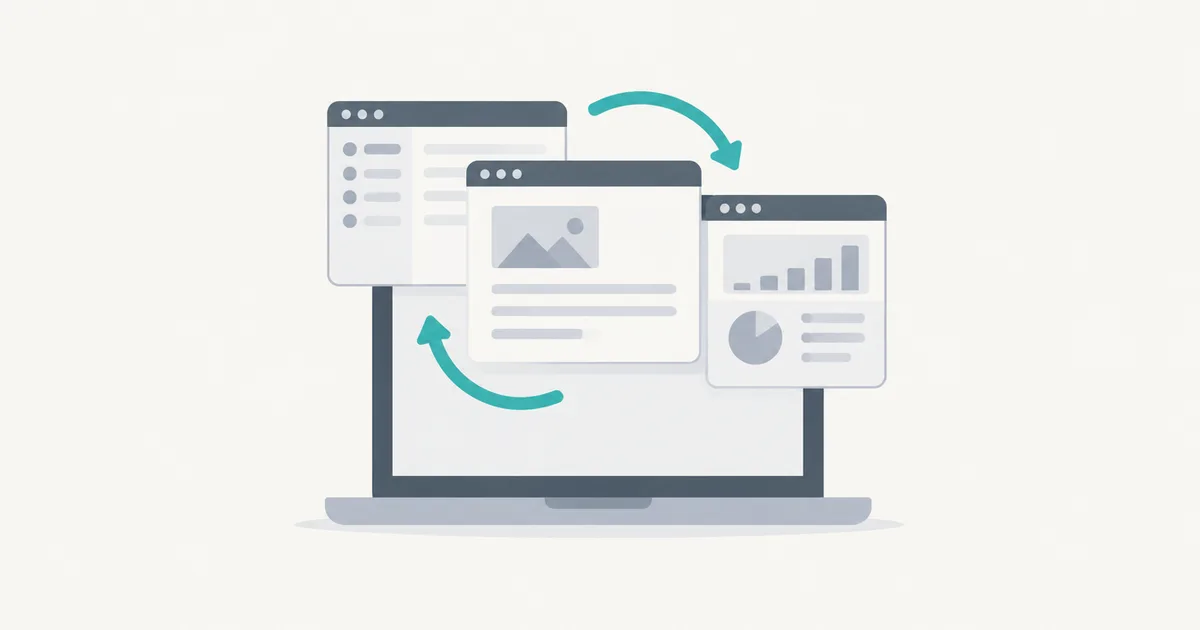
Here is a quiet truth about working alone: you are the developer, the support desk, the project manager and the person who answers the invoice emails. Every one of those roles wants your attention, and they do not take turns politely.
Context switching is the price you pay for that. It is rarely visible on a time sheet, but it is often the reason a day of "work" produces so little. Let me explain what it really costs, and what you can do about it by design instead of willpower.
The cost is not the switch, it is the return
When you jump from code to an email and back, the email itself might take two minutes. The expensive part comes after. Your head has to rebuild the picture: which file, which function, which half formed idea you were holding.
That rebuild is slow, and it is invisible. You can feel it as a fog in the first minutes after an interruption, where you reread the same lines without absorbing them. The more complex the work, the longer the fog lasts. I explore the focus side of this in how to protect deep work.
Not all switches are equal
Some switches cost little. Moving between two similar tasks, like answering two support emails, hardly disturbs your thinking. Others cost a lot, like leaving a tricky bug to join a call about invoices.
A useful rule is to count the distance between the two kinds of thinking. The further apart they are, the more expensive the switch. Writing code and writing a proposal sit far apart. Writing code and reading documentation sit close together.
Batch the shallow work
The most effective change I know is to group small, shallow tasks into set windows. Answer all your messages at two or three fixed times. Handle invoices once a week. Review feedback in one sitting.
This does not remove the interruptions, it just moves them to a place where they cost less. Instead of fifteen tiny switches scattered across the day, you pay for two or three planned ones. Many freelancers also find that people are fine with slightly slower replies once they know the pattern.
Give deep work a protected block
Pick the part of the day where you think best and guard it. Treat it as an appointment with the hardest problem on your list. Close the inbox, silence notifications and write down the one outcome you want from the block.
If an urgent request arrives, ask whether it is truly urgent or just loud. Most things that feel urgent can wait ninety minutes. For the real exceptions, decide in advance what counts, so you are not negotiating with yourself while distracted.
Leave yourself a trail
You cannot avoid every interruption, so make the return cheaper. Before you stop, write a short note: what you were doing, what you planned next and any small detail you will not remember.
I think of this as leaving a bookmark. When you come back, you read three lines and you are most of the way back in. It takes thirty seconds and saves far more than it costs. Tools that keep a tree of tasks and subtasks help here too, because the next step is already written down. This is one reason I like nested lists, and I explain why in the case for nested subtasks.
Limit what you carry at once
Context switching also happens inside your head when you run too many projects at the same time. Three active client projects mean three sets of details fighting for space.
Where you can, work through one project in focused stretches instead of nibbling at all of them daily. If you must juggle, keep a short status line for each project so you can reload it quickly. And be honest about capacity: taking on one more client often costs more than the fee suggests. The trap of doing many things at once is the subject of the multitasking trap for solopreneurs.
Design your tools to fight switching
Small environment choices add up. Keep one place where tasks live, not five. Turn off badges that pull you into apps you did not choose to open. Put your communication tools in a separate window or on a different screen so they are out of sight during focused work.
I built F4Goals partly around this idea: one calm place to see what matters now, with the rest folded away. But the principle works with any setup. Fewer places to look means fewer reasons to leave.
Accept the leftover cost
You will never get rid of context switching entirely. A solo business needs you in several roles, and that is part of the deal.
The goal is to make the switches fewer, shorter and cheaper. Batch the shallow work, protect one deep block, leave a trail and carry less at once. Do those four things and you will feel the difference within a week, without needing any more discipline than you already have.
Streamline your output with
F4Goals
A high-speed organization system designed for those who value intentionality and execution. Built to keep your goals in focus and your tasks moving forward.