Calculate Landed Cost Before You Set a Price
The supplier quote is not your cost. Add shipping, duties, fees and inspection to find your true landed cost and set a price floor you can trust.
Mohamad Mouaz
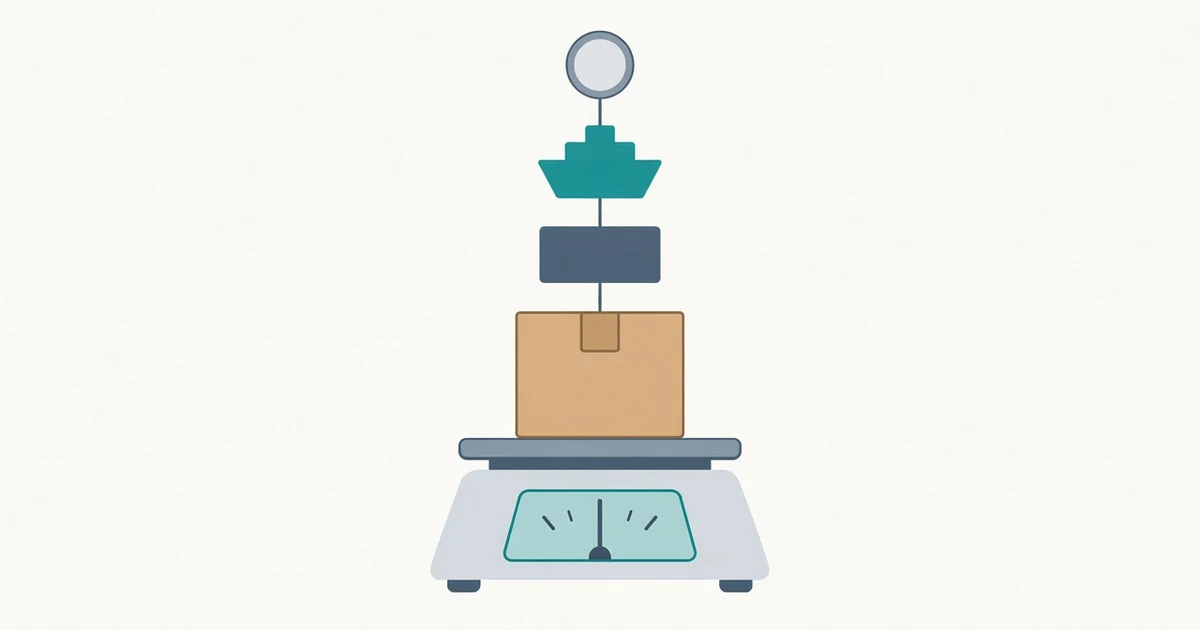
Here is a mistake I see all the time. A seller finds a product, sees a supplier price of four dollars, sets a retail price of twenty, and celebrates a huge margin. Three months later, the bank account says something very different.
The gap between those two stories is landed cost. It is the true cost of getting one unit into your hands, ready to sell. If you price from the supplier quote instead of the landed cost, you are guessing.
What landed cost actually includes
The supplier price is only the start. To get a product from a factory to your shelf, you pay for many other things. Landed cost adds them all up and divides by the number of units.
The main parts are the product price itself, shipping from the supplier to you, import duties and taxes, customs and broker fees, payment and currency conversion fees, inspection or quality check costs, packaging you add yourself, and the cost of moving stock to your warehouse or fulfilment partner.
Not every order has every cost. But most first-time sellers forget at least three of them, and those three are often what turns a good product into a break-even one.
A simple worked example
Say you order 500 units at 4 dollars each. That is 2,000 dollars for the goods.
Shipping by sea costs 600 dollars. Duties come to 8 percent of the goods value, which is 160 dollars. Your customs broker charges 150 dollars. Your bank and payment fees add 60 dollars. You pay 200 dollars for an inspection before shipping. Moving the stock from the port to your fulfilment partner costs 180 dollars.
Add it all up and you have 3,350 dollars. Divide by 500 units and your landed cost is 6.70 dollars per unit. That is 67 percent more than the supplier quote. If your plan assumed a cost of 4 dollars, every pricing decision you made was built on sand.
Do not forget the costs after landing
Landed cost gets the product to you. It does not get it to the customer. For pricing, you also need the costs of selling each unit: marketplace or payment fees, fulfilment and shipping to the buyer, returns and damaged stock, and advertising.
I went through those selling costs in do the margin math before you love a product. Landed cost is the foundation underneath that calculation. Get it right first, then add the selling costs on top.
Ask your supplier the right questions
Many surprises come from not knowing what the supplier price covers. Is it the price at the factory door, or does it include delivery to a port? Does it include packaging? Who pays for the samples? Are there extra charges for custom labels?
Ask these before you order. The answers change your landed cost a lot. I keep a full list in questions to ask before your first supplier order.
Order size changes everything
Many landed costs are fixed per shipment, not per unit. A broker charges the same fee whether you import 100 units or 1,000. An inspection costs about the same either way.
That means small first orders have a much higher landed cost per unit. This is fine, and often wise, because a small order limits your risk. But you need to know it. Price your first batch knowing your per-unit cost will be higher, and plan for it to drop on later, larger orders, rather than assuming the low cost from day one.
Build a landed cost sheet
You do not need special software. A spreadsheet with one row per order works well. List each cost in its own column, add a total and divide by units. Keep a copy for every order you place.
Over time, this sheet becomes valuable. You see how shipping costs change by season. You see which suppliers have hidden fees. You see how order size affects your cost. That history makes every future pricing decision faster and safer.
Use landed cost to set your price floor
Once you know landed cost and selling costs, you know the lowest price at which you can sell without losing money. Call it your price floor.
Every pricing decision should start from that floor. Discounts, bundles, ad spend and promotions all need to stay above it. During busy periods like the holiday season, when it is tempting to drop prices, the floor keeps you from selling at a loss without realising it.
From there, you can set your real price based on what buyers will pay and what competitors charge, as I discussed in data-driven e-commerce pricing.
Check before you commit
Before you place your next order, spend twenty minutes working out the landed cost. Get quotes for shipping, check duty rates for your product category and add every fee you can find. If the numbers still work with a healthy margin, go ahead.
If they do not, you have saved yourself from an expensive lesson. Checking demand first helps too, and TrendHunterNeo can help you screen whether a product is worth the effort before you even get to supplier quotes.
The supplier price is the number that excites you. Landed cost is the number that tells you the truth. Price from the truth.
Frequently asked questions
- What is landed cost?
- The full cost to get a product to your shelf: supplier price plus shipping, duties, broker fees, inspection and other costs, divided by the number of units.
- Is landed cost the same as my total cost per sale?
- No. You still need selling costs such as marketplace and payment fees, shipping to the customer, returns and advertising.
- Why does order size change landed cost?
- Many costs are fixed per shipment, like broker and inspection fees, so a larger order spreads them over more units.
- How do I use landed cost when pricing?
- Add selling costs to find your price floor, the lowest price at which you do not lose money, and set every price above it.
Find your next winning product with
TrendHunterNeo
AI-powered research that scans live trend data and competitor storefronts, then returns a profitability verdict in under a minute. Validate a product idea before you spend on inventory or ads.