Break a Client Project Into Tasks You Can Start Today
A new client brief can feel overwhelming. Learn how to define the outcome, split the work and choose a first task you can start today.
Mohamad Mouaz
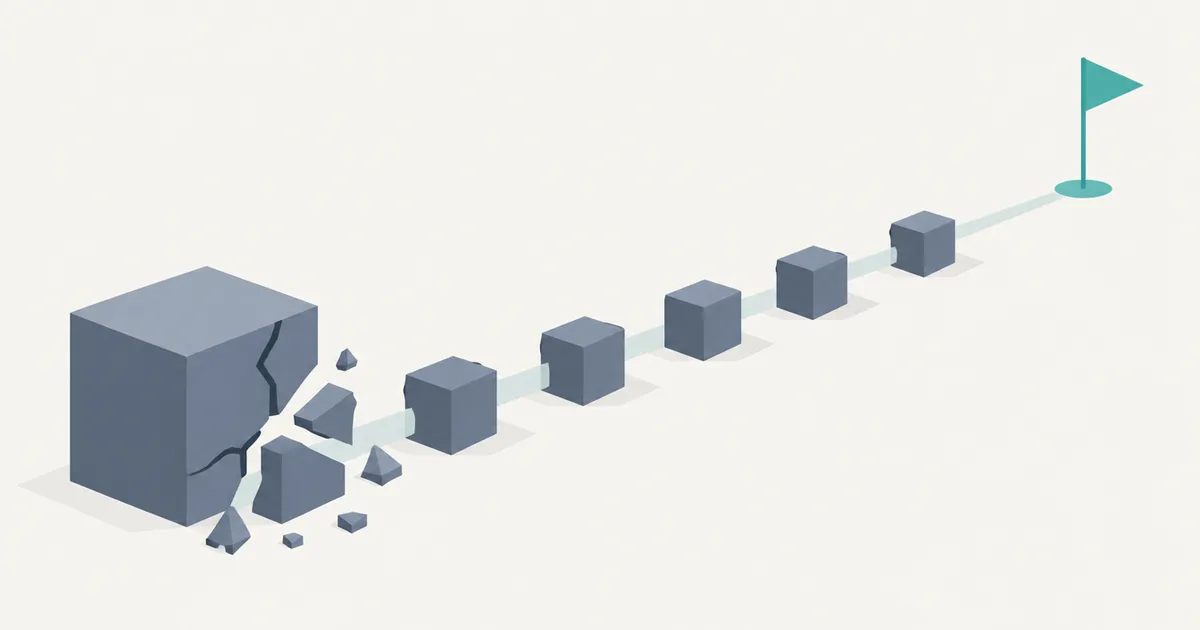
A new client project lands in your inbox. The brief is two paragraphs, the deadline is soon and your first reaction is a small wave of panic. Where do you even start?
The honest answer is that you start by shrinking the problem. A big project is just a pile of small tasks that nobody has written down yet. This post is a simple way to turn that pile into something you can begin today, without pretending you know everything up front.
Start with the outcome, not the tasks
Before you list anything, write one sentence describing what the project looks like when it is done and the client is happy. Not the features, the result.
"The shop can take orders and the owner can manage products without help." "The report shows monthly figures clearly enough for a board meeting." A clear outcome gives every later decision something to check against. Without it, you will add tasks that feel productive but do not move the project forward.
List the big chunks first
Now split the project into a handful of major parts. Three to seven is plenty. Think of them as chapters in a book. For a website, they might be design, content, build, testing and launch. For a data project: collecting, cleaning, analysis and delivery.
Do not worry about details yet. The aim is to see the overall shape. If you struggle to name the chunks, ask yourself what has to be true before the next stage can begin. That question usually reveals the order.
Break only the first chunk into steps
Here is the key move. Take the chunk you will start with and break it down into concrete tasks. Leave the later chunks rough.
Detailed plans for work that is weeks away are mostly fiction, because the project will change before you reach it. Planning only the first stretch in detail gives you momentum without wasting effort. If you want more help with this step, breaking goals into achievable steps goes deeper.
Make the first task embarrassingly small
The very first task should be so easy that you can start it without any resistance. Create the folder. Reread the brief and underline anything unclear. Write down the three questions you need answered.
Starting small matters more than it sounds. Most project dread comes from the gap between "nothing done" and "something done." A tiny first task closes that gap in minutes, and momentum does the rest. If procrastination is your struggle, a framework to beat it can help.
Turn unknowns into questions
Every client brief hides gaps. Instead of worrying about them, convert each into a question and send the list early. What content will you provide? Who approves the design? What happens if the scope changes?
Asking sooner is cheaper than discovering the gap late. It also shows the client that you are careful, which builds trust. Keep the questions short and specific so that they are easy to answer.
Mark the risky parts
Some pieces of a project are riskier than others: a new technology, an unclear requirement, a dependency on someone else. Mark these clearly and put them early in the plan, not late.
If something is going to cause trouble, you want to know while you still have time to adjust. Doing the risky work first is uncomfortable, but it removes the worst surprises from the end of the project.
Set checkpoints the client can see
Agree on a few moments where you show progress. They do not have to be formal. A short update with a screenshot or a draft is enough. Regular checkpoints keep the client involved, catch misunderstandings early and spread the feedback across the project instead of dumping it at the end.
Each checkpoint also gives you a natural place to review your plan and adjust the later chunks. That keeps the rough parts of the plan from going stale, since you refresh them just before you need them.
Use structure that matches the work
A nested list fits this process well. The project sits at the top, the chunks underneath, and the detailed tasks only for the chunk in progress. When one part is done, you close it and the list shrinks.
This is how I plan my own client work in F4Goals, and I explain the thinking in the case for nested subtasks. A notebook with indented lines works as well.
Do it today
Take the project that is making you nervous. Write the outcome in one sentence. Name the chunks. Break down only the first one. Pick a tiny first task and do it before you close your laptop.
You will not have a perfect plan, and you do not need one. You need a first step, and now you have it.
Streamline your output with
F4Goals
A high-speed organization system designed for those who value intentionality and execution. Built to keep your goals in focus and your tasks moving forward.