The Two-Minute Shutdown Ritual That Ends Your Workday
Work thoughts follow you home when the day never really ends. This two-minute shutdown ritual closes open loops and sets up tomorrow's first task.
Mohamad Mouaz
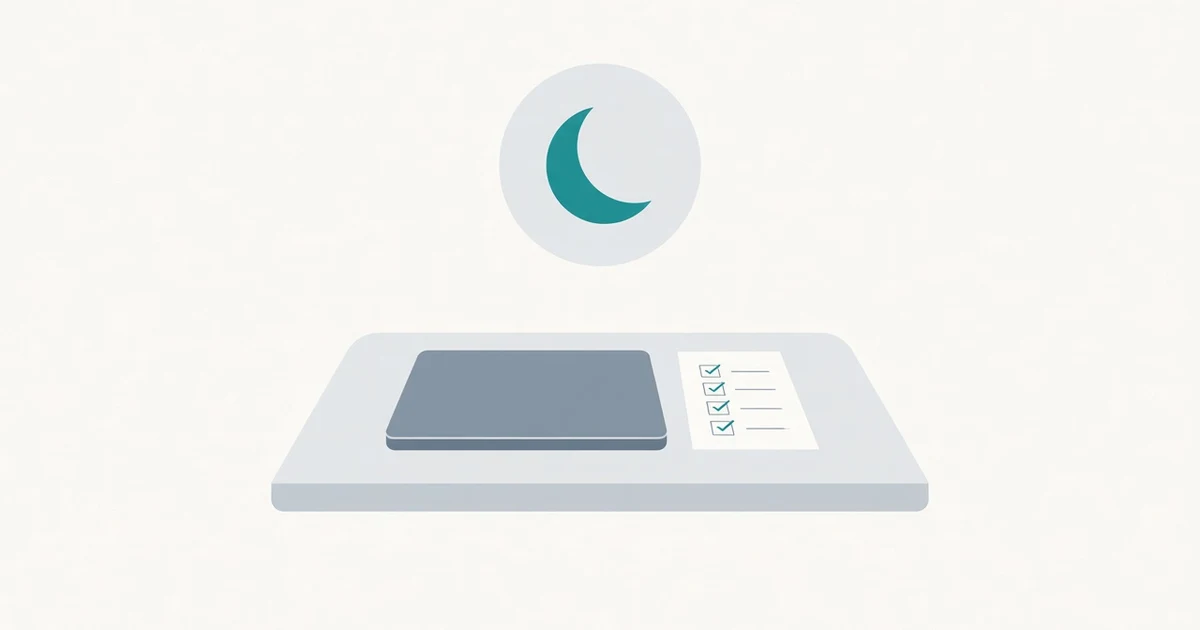
Most workdays do not end. They just stop. You close the laptop in the middle of a thought, carry three half-finished tasks to the dinner table, and open your inbox again at ten at night because something feels unfinished.
The fix I use is small and almost boring: a two-minute shutdown ritual. It is the last thing I do before I stop working, and it changed how my evenings feel more than any app or method I have tried.
Why your brain keeps working after you stop
Unfinished work has a habit of staying in your head. When a task is open and you have no record of where you left it, part of your attention keeps holding it, just in case. That is why you remember the email you forgot to send while you are brushing your teeth.
The answer is not to finish everything. That never happens. The answer is to give each open loop a place to live outside your head, so your mind can let go of it. I wrote about this idea in more depth in how closing open loops clears your mental space. The shutdown ritual is the daily, practical version.
The ritual, step by step
Here is the whole thing. It takes about two minutes once it is a habit, and maybe five the first week.
First, look at what you touched today. Scan your task list and your open tabs. For anything you started but did not finish, write one line about where you stopped and what the very next action is. "Halfway through the pricing table, next is the annual plan row" is enough.
Second, capture anything floating. If a new task appeared during the day in a chat message, a call or your own head, put it in your inbox now. Do not sort it. Just get it out. If capture tends to turn into chaos for you, this guide on capturing tasks without clutter will help.
Third, pick tomorrow's first task. Not the whole plan. Just the first thing you will do when you sit down. Choosing it tonight means tomorrow starts with action instead of a decision.
Fourth, say a closing phrase. This sounds silly. Do it anyway. Some people say "shutdown complete." I say "done for today." The words are a marker. When a worry about work shows up later, you can remind yourself that you already checked everything and wrote it down.
Why picking the first task matters most
If you only keep one step, keep this one. The first thirty minutes of the day set the tone. When you start by reading messages and deciding what to do, you are spending your freshest attention on choices instead of work.
A first task chosen the evening before removes that friction. You sit down, you know what to open, you start. By the time you look at messages, you already have something done, and it is much harder for the day to run away from you.
Pick something you can start in under a minute. "Draft the intro for the client proposal" is better than "work on proposal." If you have trouble writing tasks like that, read how to write task names you can act on.
What to do when the day was a mess
Some days end with nothing finished and a longer list than you started with. Those are the days you will most want to skip the ritual, and the days it helps most.
On a bad day, keep it even shorter. Write where you stopped on the one thing that matters. Pick tomorrow's first task. Close. You do not need to reflect on what went wrong tonight. That belongs in your weekly review, not in the last two minutes of a tiring day.
Make it stick
A ritual only works if it happens at the same point every day. Tie it to something that already happens. Mine runs right before I close the laptop lid. For others it is when the kids come home, or when a calendar reminder fires at a fixed time.
Keep the steps in the same order every time. Do not add to them for at least a month. The power of the ritual comes from it being so small that you never have a reason to skip it.
If you use a task manager, keep a recurring task called "shutdown" at the end of each day. In F4Goals I keep it as a small nested list so I can tick through the steps without thinking. Paper works just as well. A sticky note on the edge of your screen with four lines on it is enough.
What changes after a few weeks
The first thing most people notice is better evenings. Work thoughts still appear, but they fade faster, because you know they are written down.
The second thing is better mornings. You start faster and with less resistance. That small win early in the day tends to carry forward.
The third thing is quieter, and it is the one I value most. You stop treating every day as a failure because the list is not empty. The list will never be empty. A good day is one where you worked on the right things and ended cleanly. The shutdown ritual gives you a way to end cleanly every single time, even when the work is far from done.
Try it tonight
You do not need to plan this. When you finish work today, give yourself two minutes. Note where you stopped. Capture what is floating. Pick tomorrow's first task. Say your closing phrase.
Then close the laptop and leave the rest for tomorrow. It will still be there, and now you will know exactly where to begin.
Frequently asked questions
- Why do work thoughts follow me home?
- Unfinished tasks with no record of where you stopped keep holding part of your attention after you close the laptop.
- What are the steps of the shutdown ritual?
- Look at what you touched today, note where you stopped, capture anything floating in your head, pick tomorrow's first task and say a closing phrase.
- Which step matters most?
- Picking tomorrow's first task. It means you start the morning with work, not with reading messages and deciding.
- How do I make the ritual stick?
- Tie it to something that already happens every day, like closing the laptop lid or the moment the kids come home.
Streamline your output with
F4Goals
A high-speed organization system designed for those who value intentionality and execution. Built to keep your goals in focus and your tasks moving forward.