Build a Simple Product Scorecard You Will Actually Use
Excitement is a bad guide for product decisions. A short weighted scorecard helps you compare ideas consistently and drop weak ones early.
Mohamad Mouaz
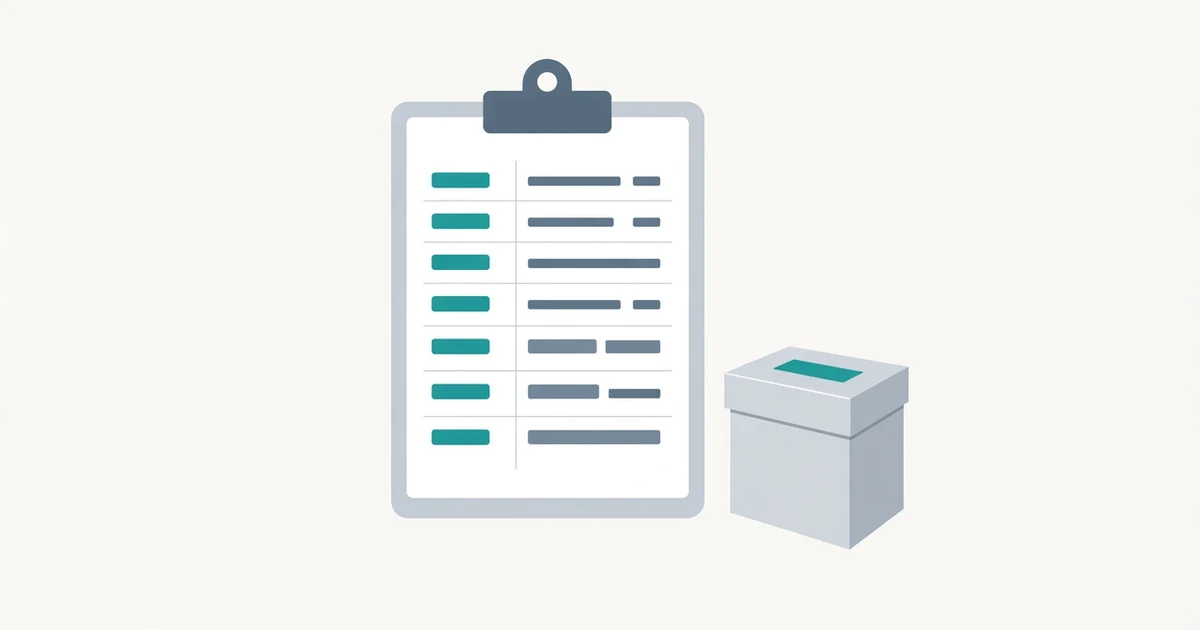
When you research products, you see many ideas. Some look exciting, some look boring and most fall somewhere in between. The problem is that excitement is a bad guide. The idea you are most excited about is not always the one most likely to make money.
A simple product scorecard helps. It gives you a consistent way to compare ideas, so you make decisions based on the same questions every time, not on your mood that day.
Why a scorecard helps
Without a scorecard, every product decision is made from scratch. You weigh different things each time. One day you focus on margin, another day on trend, another day on how much you like the product.
That inconsistency leads to bad choices. A scorecard forces you to look at the same factors for every idea. It also makes it much easier to compare ideas side by side, and to explain your decision later.
Keep it short
The biggest mistake is making the scorecard too detailed. If it has thirty criteria, you will never use it. Aim for six to eight factors, each scored from one to five.
The goal is a quick, honest first pass, not a full business plan. Ideas that score well get deeper research. Ideas that score poorly get dropped early, before you spend real time on them.
The factors I use
Here are the factors I find most useful. You can adapt them to your store.
Demand. Is there clear, steady interest in this product? Look at search trends, marketplace sales signals and community discussion. A steady climb scores higher than a sudden spike.
Margin. After landed cost and selling costs, how much profit is left per unit? Use the method from do the margin math before you love a product.
Competition. How crowded is the market, and how strong are the top sellers? Many competitors with weak listings can still score well. A few dominant brands with excellent listings score low.
Differentiation. Can you offer something clearly better or different? Better photos, a better bundle, a feature buyers are asking for?
Seasonality. Does the product sell all year, or only for a short period? Neither is bad, but you need to know. Evergreen products usually score higher for small stores.
Logistics. Is it easy to ship, store and source? Fragile, heavy or oversized items score lower.
Risk. How likely are returns, quality problems or regulatory issues? Simple products with few failure points score higher.
Weight what matters most
Not all factors are equal. For most small stores, margin and demand matter most. You might count them double.
Decide your weights once, write them down and keep them consistent. Changing weights to make a favourite idea look better defeats the purpose.
Set a minimum score
Decide in advance what score an idea needs to move forward. For example, any idea below a certain total gets dropped, and any idea with a one in margin or demand gets dropped regardless of the total.
Hard rules like these protect you from your own enthusiasm. If an idea fails the bar, let it go, however much you like it.
Use real evidence for each score
A score is only as good as the evidence behind it. Write a short note next to each score explaining why you gave it. "Demand 4: steady growth over two years, three active communities discussing it." "Competition 2: top three sellers have strong brands and thousands of reviews."
These notes make your decisions easier to review later and stop you from scoring based on gut feeling. For guidance on gathering evidence, see the questions in a five-question checklist before you back a product.
Compare ideas side by side
Put your scorecards into a simple spreadsheet, one row per idea. Sort by total score. Patterns will appear. You might notice that your highest-scoring ideas share certain traits, or that a category you love consistently scores poorly.
That insight helps you focus your research where it is most likely to pay off.
Use it in your routine
A scorecard is most useful when you use it regularly. Add it to your weekly research. Every idea that catches your attention gets a quick score. Over time, you build a list of scored ideas you can return to.
I described a full routine in build a weekly product research routine. The scorecard fits neatly into the screening step.
Tools and judgment
Tools like TrendHunterNeo can speed up the evidence-gathering, especially for demand and competition. But the scoring itself should stay yours. You know your store, your budget and your strengths better than any tool.
A good scorecard will not guarantee success. What it does is make your decisions more consistent, more honest and easier to learn from. Build one this week, score your current ideas and see which ones really deserve your money.
Frequently asked questions
- How many criteria should a product scorecard have?
- Six to eight factors scored from one to five. More than that and you will stop using it.
- Should all factors count equally?
- No. For most small stores, margin and demand matter most and can be weighted double.
- How do I make scores trustworthy?
- Write a short note with the evidence behind each score, so the number reflects facts rather than excitement.
- When should an idea be dropped?
- Set a minimum total in advance, and drop any idea that scores a one on margin or demand regardless of total.
Find your next winning product with
TrendHunterNeo
AI-powered research that scans live trend data and competitor storefronts, then returns a profitability verdict in under a minute. Validate a product idea before you spend on inventory or ads.