Run a Pre-Mortem Before Your Next Project Starts
Imagine your project has already failed, then work out why. A thirty-minute pre-mortem surfaces hidden risks while you can still prevent them.
Mohamad Mouaz
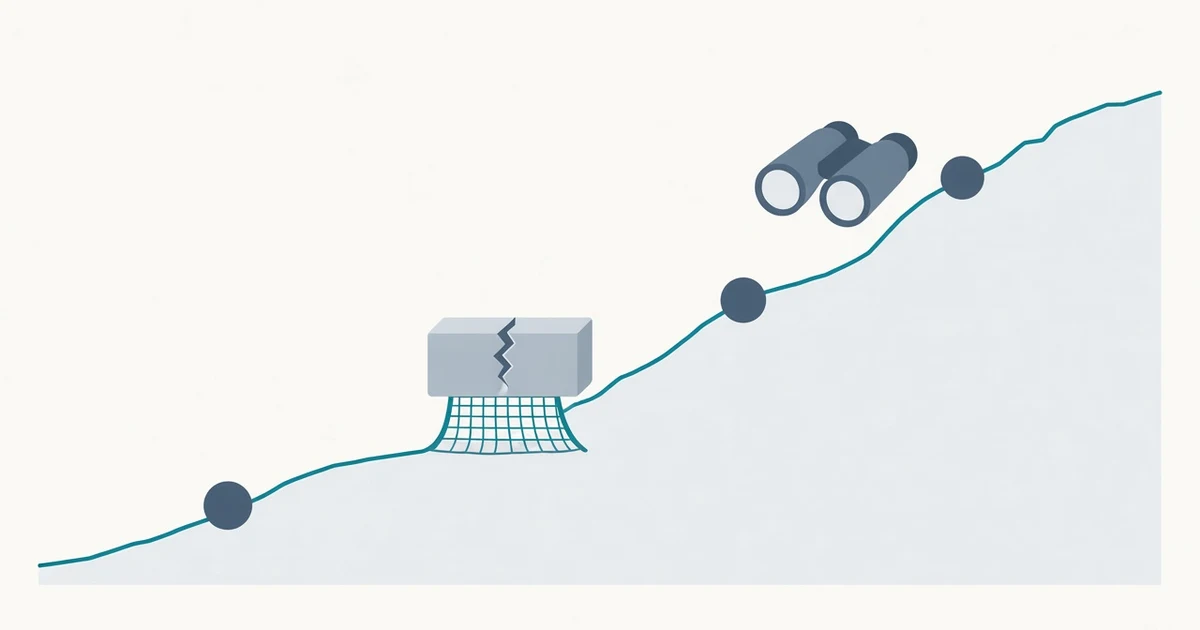
Most project reviews happen at the end. Something went wrong, everyone gathers to figure out why, and the lessons arrive too late to help.
A pre-mortem flips that around. Before the project starts, you imagine it has already failed, and then work out why. It sounds gloomy. It is actually one of the most practical planning tools I know, and it takes less than half an hour.
How a pre-mortem works
The idea is simple. Picture the project six months from now. It has failed. Not a little. Clearly and obviously failed. Now ask: what went wrong?
Write down every reason you can think of. Be specific. "The client changed their mind about the design halfway through." "I underestimated the testing time." "I got busy with other work and stopped making progress."
Because you are imagining the failure as already real, your mind stops defending the plan and starts looking for weak spots. People find risks in a pre-mortem that they would never mention in a normal planning session.
Why it works better than asking about risks
If you ask "what could go wrong?", most people give polite, general answers. Optimism takes over. You want the project to succeed, so you downplay risks.
When you say "it has failed, tell me why," the question changes. You are not being negative about the plan. You are explaining a story that has already happened. That small shift frees people, including you, to be honest.
Run one by yourself
You do not need a team. A solo pre-mortem works well for freelance projects, personal goals and side projects.
Set a timer for ten minutes. Write the headline: "This project failed." Then list every reason you can imagine. Do not filter. Include the uncomfortable ones, like "I lost interest" or "I never told the client about the delay."
Sort the reasons
When the timer ends, look at your list. Group similar reasons together. You will usually find a handful of main themes.
For each theme, ask two questions. How likely is this? How bad would it be? Focus on the reasons that are both reasonably likely and seriously damaging.
Turn risks into actions
This is the step that makes a pre-mortem useful. For each important risk, decide on one specific action that reduces it.
If the risk is scope changes, write a clear scope document and agree on how changes will be handled. Handle scope creep without losing the client covers how to do this.
If the risk is underestimating time, add a buffer or break the work into smaller pieces you can estimate better. Break goals into achievable steps can help here.
If the risk is losing momentum, schedule regular check-ins with yourself, or set a small visible milestone each week.
Add these actions to your plan as real tasks, not just good intentions.
Note your warning signs
For each major risk, write down an early warning sign. Something you could notice before the failure becomes real.
"If the client has not given feedback within five days, the design phase is slipping." "If I have not worked on this for a full week, I am losing momentum."
Check these signs during your weekly review. Catching problems early is much easier than fixing them late. This ties in closely with avoiding project drift.
Use it with clients
A pre-mortem can also be a powerful conversation with a client. At the start of a project, ask them: "Imagine this project goes badly. What would have caused it?"
Clients often reveal concerns they would not raise otherwise. Approval delays on their side. Internal politics. A budget that might change. Knowing these early lets you plan around them, and shows the client you think ahead.
Revisit it halfway
A pre-mortem is not a one-time ritual. Around the middle of the project, pull out your original list and read it again. Some risks will have faded. Others will have grown. New ones will have appeared that you could not see at the start.
Spend five minutes updating the list. Cross off what no longer matters, add anything new and check whether your actions are still in place. This small check often catches a problem just before it becomes expensive.
Keep it short
A pre-mortem does not need to be long. Ten minutes to list reasons, ten minutes to sort and pick the important ones, ten minutes to decide actions. Thirty minutes total for a big project, less for smaller ones.
The value comes from doing it at all, not from making it perfect.
Add it to how you start projects
I now run a pre-mortem at the start of every project that will take more than a couple of weeks. In F4Goals I add the resulting actions as tasks nested under the project, and the warning signs as a short note on the parent goal.
Whatever tools you use, try it on your next project. Imagine it has failed. Write down why. Then make sure it does not happen. It is a strange way to start, but it is one of the best ways I know to finish well.
Frequently asked questions
- What is a pre-mortem?
- Before a project starts, imagine it has clearly failed and list every reason why. Then use that list to prevent the failure.
- Why does it work better than asking what could go wrong?
- Imagining a failure that already happened gets past optimism and surfaces specific, honest risks.
- Can I run a pre-mortem alone?
- Yes. Set a ten-minute timer, write the reasons, sort them by likelihood and impact, and pick actions for the biggest risks.
- What should I do with the risks I find?
- Give each important risk one specific action and an early warning sign, then revisit the list halfway through the project.
Streamline your output with
F4Goals
A high-speed organization system designed for those who value intentionality and execution. Built to keep your goals in focus and your tasks moving forward.